

FEATURED


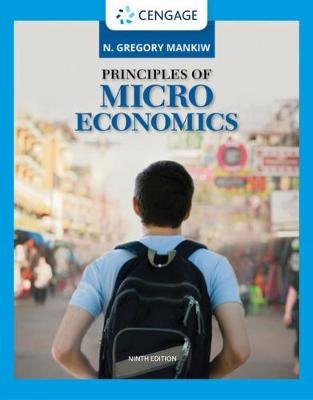


Principles of Microeconomics 9th Edition:
About the Author
Preface: To the Instructor
Brief Contents
Contents
Preface: To the Student
Chapter 1: Ten Principles of Economics
1-1 How People Make Decisions
1-2 How People Interact
1-3 How the Economy as a Whole Works
1-4 Conclusion
Chapter in a Nutshell
Key Concepts
Questions for Review
Problems and Applications
Chapter 2: Thinking Like an Economist
2-1 The Economist as Scientist
2-2 The Economist as Policy Adviser
2-3 Why Economists Disagree
2-4 Let’s Get Going
Chapter in a Nutshell
Key Concepts
Questions for Review
Problems and Applications
Appendix Graphing: A Brief Review
Chapter 3: Interdependence and the Gains from Trade
3-1 A Parable for the Modern Economy
3-2 Comparative Advantage: The Driving Force of Specialization
3-3 Applications of Comparative Advantage
3-4 Conclusion
Chapter in a Nutshell
Key Concepts
Questions for Review
Problems and Applications
Chapter 4: The Market Forces of Supply and Demand
4-1 Markets and Competition
4-2 Demand
4-3 Supply
4-4 Supply and Demand Together
4-5 Conclusion: How Prices Allocate Resources
Chapter in a Nutshell
Key Concepts
Questions for Review
Problems and Applications
Chapter 5: Elasticity and Its Application
5-1 The Elasticity of Demand
5-2 The Elasticity of Supply
5-3 Three Applications of Supply, Demand, and Elasticity
5-4 Conclusion
Chapter in a Nutshell
Key Concepts
Questions for Review
Problems and Applications
Chapter 6: Supply,Demand, and Government Policies
6-1 Controls on Prices
6-2 Taxes
6-3 Conclusion
Chapter in a Nutshell
Key Concepts
Questions for Review
Problems and Applications
Chapter 7: Consumers, Producers, and the Efficiency of Markets
7-1 Consumer Surplus
7-2 Producer Surplus
7-3 Market Efficiency
7-4 Conclusion: Market Efficiency and Market Failure
Chapter in a Nutshell
Key Concepts
Questions for Review
Problems and Applications
Chapter 8: Application: The Costs of Taxation
8-1 The Deadweight Loss of Taxation
8-2 The Determinants of the Deadweight Loss
8-3 Deadweight Loss and Tax Revenue as Taxes Vary
8-4 Conclusion
Chapter in a Nutshell
Key Concept
Questions for Review
Problems and Applications
Chapter 9: Application: International Trade
9-1 The Determinants of Trade
9-2 The Winners and Losers from Trade
9-3 The Arguments for Restricting Trade
9-4 Conclusion
Chapter in a Nutshell
Key Concepts
Questions for Review
Problems and Applications
Chapter 10: Externalities
10-1 Externalities and Market Inefficiency
10-2 Public Policies toward Externalities
10-3 Private Solutions to Externalities
10-4 Conclusion
Chapter in a Nutshell
Key Concepts
Questions for Review
Problems and Applications
Chapter 11: Public Goods and Common Resources
11-1 The Different Kinds of Goods
11-2 Public Goods
11-3 Common Resources
11-4 Conclusion: The Importance of Property Rights
Chapter in a Nutshell
Key Concepts
Questions for Review
Problems and Applications
Chapter 12: The Design of the Tax System
12-1 An Overview of U.S. Taxation
12-2 Taxes and Efficiency
12-3 Taxes and Equity
12-4 Conclusion: The Trade-Off between Equity and Efficiency
Chapter in a Nutshell
Key Concepts
Questions for Review
Problems and Applications
Chapter 13: The Costs of Production
13-1 What Are Costs?
13-2 Production and Costs
13-3 The Various Measures of Cost
13-4 Costs in the Short Run and in the Long Run
13-5 Conclusion
Chapter in a Nutshell
Key Concepts
Questions for Review
Problems and Applications
Chapter 14: Firms in Competitive Markets
14-1 What Is a Competitive Market?
14-2 Profit Maximization and the Competitive Firm’s Supply Curve
14-3 The Supply Curve in a Competitive Market
14-4 Conclusion: Behind the Supply Curve
Chapter in a Nutshell
Key Concepts
Questions for Review
Problems and Applications
Chapter 15: Monopoly
15-1 Why Monopolies Arise
15-2 How Monopolies Make Production and Pricing Decisions
15-3 The Welfare Cost of Monopolies
15-4 Price Discrimination
15-5 Public Policy toward Monopolies
15-6 Conclusion: The Prevalence of Monopolies
Chapter in a Nutshell
Key Concepts
Questions for Review
Problems and Applications
Chapter 16: Monopolistic Competition
16-1 Between Monopoly and Perfect Competition
16-2 Competition with Differentiated Products
16-3 Advertising
16-4 Conclusion
Chapter in a Nutshell
Key Concepts
Questions for Review
Problems and Applications
Chapter 17: Oligopoly
17-1 Markets with Only a Few Sellers
17-2 The Economics of Cooperation
17-3 Public Policy toward Oligopolies
17-4 Conclusion
Chapter in a Nutshell
Key Concepts
Questions for Review
Problems and Applications
Chapter 18: The Markets for the Factors of Production
18-1 The Demand for Labor
18-2 The Supply of Labor
18-3 Equilibrium in the Labor Market
18-4 The Other Factors of Production: Land and Capital
18-5 Conclusion
Chapter in a Nutshell
Key Concepts
Questions for Review
Problems and Applications
Chapter 19: Earnings and Discrimination
19-1 Some Determinants of Equilibrium Wages
19-2 The Economics of Discrimination
19-3 Conclusion
Chapter in a Nutshell
Key Concepts
Questions for Review
Problems and Applications
Chapter 20: Income Inequality and Poverty
20-1 Measuring Inequality
20-2 The Political Philosophy of Redistributing Income
20-3 Policies to Reduce Poverty
20-4 Conclusion
Chapter in a Nutshell
Key Concepts
Questions for Review
Problems and Applications
Chapter 21: The Theory of Consumer Choice
21-1 The Budget Constraint: What a Consumer Can Afford
21-2 Preferences: What a Consumer Wants
21-3 Optimization: What a Consumer Chooses
21-4 Three Applications
21-5 Conclusion: Do People Really Think This Way?
Chapter in a Nutshell
Key Concepts
Questions for Review
Problems and Applications
Chapter 22: Frontiers of Microeconomics
22-1 Asymmetric Information
22-2 Political Economy
22-3 Behavioral Economics
22-4 Conclusion
Chapter in a Nutshell
Key Concepts
Questions for Review
Problems and Applications
Glossary
Index


 Dentistry
Reviews
There are no reviews yet.